Is Root Canal Treatment Painful? The Truth About Modern Endodontics
For decades, root canal treatment has carried an undeserved reputation. The mere mention of the procedure often triggers anxiety, hesitation, and fear. Many patients associate it with intense pain and discomfort — often based on outdated stories rather than present-day reality.
The truth, however, is very different.
Modern endodontics has transformed root canal therapy into a precise, comfortable, and highly predictable treatment. Today, it is not a painful procedure — it is a pain-relieving one.
Understanding how root canal treatment works, why it is needed, and how technology has evolved helps replace fear with clarity.
Where the Fear of Root Canal Began
The fear surrounding root canal therapy largely originates from older dental practices when technology, anesthesia, and sterilization methods were limited.
In the past:
- Anesthetic techniques were less refined
- Diagnostic imaging lacked precision
- Instruments were manual and time-consuming
- Infection control protocols were not as advanced
These limitations sometimes made procedures longer and less comfortable.
Modern dentistry, however, has completely changed this experience.
Today’s root canal procedures are performed with advanced anesthesia, precision rotary instruments, digital imaging, and strict infection control protocols — significantly reducing discomfort and improving success rates.
Understanding the Real Source of Pain
It is important to distinguish between the pain caused by infection and the procedure itself.
Inside every tooth lies pulp tissue — a soft structure containing nerves and blood vessels. When bacteria enter this space due to:
- Deep decay
- Does not resolve quickly
- Trauma
- Repeated dental procedures
Inflammation develops. This inflammation increases pressure inside the rigid tooth structure, leading to severe pain.
The discomfort patients experience before treatment is the result of infection — not the root canal procedure.
Root canal therapy removes the infected pulp, disinfects the canal system, and eliminates the source of pain.
What Happens During a Modern Root Canal Procedure
Understanding the steps helps reduce anxiety.
First, the affected tooth is thoroughly examined using digital imaging to assess the extent of infection and canal anatomy.
Next, local anesthesia is administered to completely numb the tooth and surrounding tissues. With modern techniques, patients typically feel only mild pressure — not sharp pain.
A protective barrier is placed to isolate the tooth and maintain a sterile field.
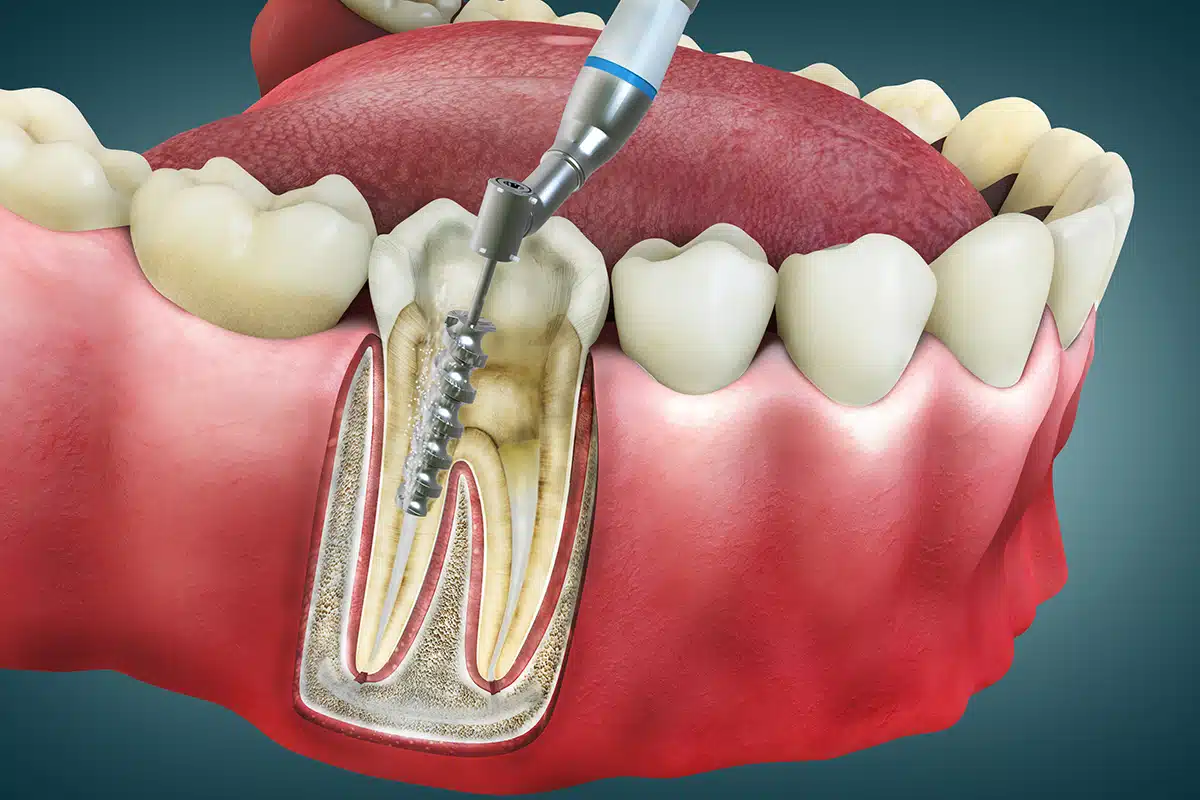
The infected pulp tissue is carefully removed. The canals are cleaned and shaped using precision rotary instruments that minimize structural damage.
After thorough disinfection, the canals are sealed with biocompatible material to prevent reinfection.
Finally, the tooth is restored — often with a crown — to ensure long-term strength and function.
Why Modern Endodontics Is Comfortable
Advancements in endodontic care have significantly improved patient experience.
Modern root canal therapy includes:
- Highly effective local anesthesia
- Digital radiography for accuracy
- Rotary endodontic instruments for smoother procedures
- Electronic apex locators for precise measurements
- Advanced sterilization protocols
These innovations allow the procedure to be completed efficiently while maintaining comfort.
Most patients report that a root canal feels similar to receiving a routine dental filling — only slightly longer in duration.
After the Procedure: What to Expect
Mild tenderness for one to two days is normal as surrounding tissues heal. This discomfort is typically manageable with prescribed or over-the-counter medication.
Severe pain after treatment is uncommon when proper protocols are followed.
With correct restoration and regular follow-ups, a root canal-treated tooth can function normally for many years.
The Importance of Preserving Natural Teeth
Saving a natural tooth offers biological advantages that no artificial replacement can fully replicate.
Preserving a tooth through root canal treatment:
- Maintains natural bite alignment
- Prevents shifting of adjacent teeth
- Preserves jawbone density
- Maintains efficient chewing function
- Avoids more complex surgical procedures
Extraction, while sometimes necessary, initiates structural changes in the jawbone and may require implants or bridges later.
Endodontic therapy focuses on conservation — protecting what nature has already created.
Conclusion: From Fear to Understanding
Root canal treatment is no longer the painful experience it was once perceived to be. It is a refined, evidence-based procedure designed to eliminate infection and preserve natural teeth.
The discomfort people fear is usually the pain of untreated infection — not the treatment itself.
Modern endodontics prioritizes patient comfort, precision, and long-term success. When performed with proper diagnosis and technique, root canal therapy becomes a predictable and effective solution.
Understanding the science behind the procedure replaces fear with confidence — and allows patients to choose preservation over extraction.
If you are experiencing persistent tooth pain or sensitivity, early evaluation can make the difference between a straightforward treatment and a complex complication.
Saving your natural tooth is not just possible — it is often the best decision for long-term oral health.